TODAYS DATE: Saturday Jan 28, 2012 YOUR ONLINE RESOURCE FOR NEWS ABOUT MESOTHELIOMA

Scientists Urge Better Understanding of Nanomaterials to Avoid Introducing 21st Century Asbestos into Society

Friday, Jan 27, 2012

Nanomaterials — man-made particles made of carbon, silicon and metals and much smaller than the width of a human hair—are already used in consumer products including stain resistant clothing, cosmetics, food additives and drug delivery systems. But nanomaterials share certain similarities with toxic asbestos fibers and too little is known about the health risks posed by nano materials.

An expert panel of the National Academy of Sciences recommended this week that a better understanding is needed of the risks of adverse health and environmental effects posed by nanomaterials in light of their rapidly expanding production and use in society. Materials that behave in unconventional ways because of their size may produce unanticipated health effects, the panel said. The concern was supported by research in the 1990s that showed that inhaled fine particles have the potential to cause more serious health effects than shown in studies of larger particles.

Nanomaterials share certain characteristics with asbestos fibers, raising concerns that they may increase risks of respiratory diseases such as lung cancer and mesothelioma, a cancer of the lining of the lung and abdomen. Approximately 3,000 people a year in the U.S. die of mesothelioma due to past exposure to asbestos. A heat resistant mineral fiber, asbestos was used in thousands of products for decades before its use was restricted due to its cancer-causing properties. The symptoms of asbestos-related disease typically appear decades after exposure.

Both asbestos and nanomaterials have fiber-like characteristics in their thin, elongated shape. They are so small that people may unknowingly inhale them, causing the fibers to penetrate deep into the lung and lodge there, causing inflammation.  Nanomaterials are being used in consumer products so people could  inhale or ingest them.

A 2009 article by French researchers in the journal Particle and Fibre Toxicology noted that studies of carbon nanotubes have shown  adverse effects similar to those observed with asbestos fibers and two recent studies by Japanese researchers showed the occurrence of malignant mesothelioma in mice and rats exposed to carbon nanotubes.

The diverse properties of nanomaterials make them challenging for researchers to assess the risks, the expert panel said. The toxic effects of nanomaterials will likely vary depending on the base materials of which they’re made.

For more information about mesothelioma and asbestos disease, click here.


Posted by wade rawlins at 4:36 PM

Elevated Rate of Lung Cancer Among Carolina Textile Workers Exposed to Asbestos, Study Says

Tuesday, Jan 24, 2012

Researchers report that textile workers in North Carolina and South Carolina who were exposed to asbestos had significantly increased incidence of lung cancer. Asbestos, a mineral fiber used in thousands of products from building materials to textiles, is associated with serious respiratory diseases including asbestosis, a scarring of the lung, lung cancer and mesothelioma, a cancer of the lining of the lung and abdomen.

In the new study published in January issue of the journal Occupational and Environmental Medicine, researchers tracked the status of more than  6,100 textile workers who had been employed at four Carolina textile mills that previously used asbestos in manufacturing. From the 1950s through the early 1970s, textile plants converted chrysotile asbestos, typically imported from Canada, and cotton fibers into yarn and woven materials. That created an occupational hazard of asbestos exposure for unsuspecting textile workers, who typically did not wear any breathing protection. 

The researchers, based at the University of Nebraska, Duke University and the University of North Carolina, reported a significantly elevated rate of death from lung cancer among the textile workers as compared to the general population. They determined that 3,356 of the textile workers employed in the mills had died as of 2003, and a disproportionate number had died of lung cancer, according to death certificate data.

The researchers also found a strong correlation between the increased mortality rate of lung cancer and the workers’ cumulative occupational exposure to asbestos. The cumulative exposure to asbestos varied considerably among the four plants. Exposure to asbestos usually occurs by breathing air in workplaces contaminated with microscopic asbestos fibers or swallowing asbestos fibers. Typically, workers do not experience symptoms of mesothelioma or other asbestos disease  for 20 years to 40 years after exposure to asbestos.

Another study published last year in the journal Lung Cancer found that textile workers in China who were exposed to asbestos had an increased risk of dying of lung cancer, mesothelioma and all forms of cancer. The trend was most pronounced among textile workers who had a high exposure to asbestos and also were smokers.

For more information about mesothelioma click here.

Posted by wade rawlins at 6:26 PM

Searching For The Fingerprints of Mesothelioma To Detect Cancer Early

Friday, Jan 20, 2012

The discovery of microscopic molecules called microRNAs offers new opportunities for the early diagnosis of cancer including malignant mesothelioma. MicroRNAs play a large role in the regulation of gene expression and have the potential to serve as biomarkers because they exhibit properties identifiable with specific type of tumors.

Early diagnosis of cancer generally leads to more effective treatment. So far, researchers have not identified any biomarkers with reasonable sensitivity and specificity to malignant mesothelioma, according to a 2012 study by German researchers published in the scientific journal PLoS One. Mesothelioma is an incurable cancer of the lining of the lung and abdomen associated with asbestos exposure

In the United States, doctors reported approximately 18,000 cases of malignant mesothelioma between 1999 and 2005. About 71,000 people in the U.S. are projected to be diagnosed with mesothelioma by 2054.

Reliable biomarkers for early diagnosis of mesothelioma need to be sensitive enough to detect tumors at early stages and specific enough to avoid false positives. Several groups of researchers have analyzed microRNA expression in malignant mesothelioma tissue samples. But the German researchers said the ideal biomarker would be one that could be observed by simply drawing a patient’s blood, a minimally-invasive procedure.

In the study, the researchers collected blood samples from 23 patients with malignant pleural mesothelioma ranging in age from 34 to 84 years old. The patients had yet to undergo surgery, chemotherapy or radiation to treat their disease.

The researchers found that the microRNA identified as miR-103 showed a promising sensitivity and specificity to malignant mesothelioma. It is part of a group of microRNAs associated with cell division, stress response and formation of new blood vessels, suggestion the deregulation of the microRNAs may contribute to human diseases. The presence of miR-103 was useful as a biomarker in distinguishing mesothelioma patients from cancer-free subjects in 75 percent to 80 percent of cases, they reported. The researchers said miR-103 should be investigated further as part of a panel of biomarkers in a prospective study.

Approximately, 2,500 to 3,000 people a year are diagnosed with mesothelioma in the U.S. Most are older workers, retirees and veterans who were exposed to asbestos decades ago, making diagnosis more difficult. The symptoms of mesothelioma typically take 20 years to 50 years to appear, so someone exposed to asbestos in the 1960s or 1970s may only recently have begun experiencing shortness of breath or other symptoms.

For more information about mesothelioma, click here.

Posted by wade rawlins at 7:45 PM

Families of Asbestos Workers At Risk of Mesothelioma From Exposure At Home

Thursday, Jan 19, 2012

A report in a British newspaper describes the terrible legacy of asbestos disease that families of asbestos workers face. Asbestos is associated with scarring of the lungs and mesothelioma, an aggressive cancer of the lining of the lung and abdomen.

According to a  Jan. 17 article in the Yorkshire Post,  eight adult children of Kora Leah, who was a foreman at Cape Asbestos in Hebben Bridge, Yorkshire, have been diagnosed with asbestos-related disease. The family has lost two siblings in recent months to mesothelioma.

When Marjorie King, one of Leah’s daughters died last July at age 67, a tumor was found on her right lung and asbestos particles were discovered in her lung tissue. Deputy Coroner Paul Marks concluded after an inquest that she died of mesothelioma.

Her sister, Maureen McGeogh, 73, of West Yorkshire, recalled that she and her siblings would play with their father when he returned home from work with his clothes still covered in asbestos dust. “I remember my mother shaking his overalls and dust going everywhere,” McGeogh recalled.

She said the children sometimes accompanied their father to work on Sunday and would play in the piles of dust. They were unaware of the danger of the asbestos dust.

Of the other siblings, Gerald, 78, has pleural plaques and emphysema while Cedric, 74, Rosalind, 71, Raymond, 69 and Glynn, 64, all have scarred lungs. Because of their exposure to asbestos they are at higher risk of developing mesothelioma.

The father Kora Leah died of lung cancer in 1958, 10 years after leaving Cape Asbestos, according to the newspaper.

According to the National Cancer Institute, there is evidence that family members of workers heavily exposed to asbestos face an increased risk of developing mesothelioma. The risk results from exposure to asbestos brought into the home on clothing, shoes, skin and hair.

When asbestos fibers get inhaled, they get trapped in the lung and remain there for a long time. The symptoms of mesothelioma typically appear 30 years to 50 years after initial exposure to asbestos. Possible signs of mesothelioma include shortness of breath and pain under the rib cage, pain or tightening of the chest, and a persistent cough that gets worse over time. It’s important to check with a doctor if you develop any of these symptoms and inform the doctor of any known exposure to asbestos.

For more information about mesothelioma, click here.

Posted by wade rawlins at 4:53 PM

CanBas Developing Mesothelioma Drug to Enhance Chemotherapy Treatment

Friday, Jan 13, 2012

CanBas Co., Ltd.,, a Japanese bio-pharmaceutical company that develops new cancer drugs that target the cell cycle, has received a boost from the U.S. Food and Drug Administration in its research efforts to add to the arsenal of drugs available to fight malignant mesothelioma.

Mesothelioma is an aggressive cancer of the lining of the lung and abdomen that affects about 3,000 people in the U.S. each year. The mortality rate for mesothelioma is high, so more effective treatment options are needed to stop the progression of the disease.

The company’s lead product is a drug known as CBP501 that enhances the effectiveness of the chemotherapy drug Cisplatin, which is standard treatment for malignant pleural mesothelioma. CBP501, a synthetic peptide, enhances the toxicity of Cisplatin as it accumulates in mesothelioma tumors.

CanBas announced  in January  that the US FDA has granted orphan drug status to CBP501 for the treatment of malignant mesothelioma. The designation qualifies the pharmaceutical company for financial incentives for the development of drugs used to treat rare diseases. Without such incentives, drug companies have difficulty justifying the investment of time and resources necessary to bring to market drugs used to treat rare diseases that may have only a limited demand and therefore limited profit.

Currently, a randomized clinical trial is underway comparing the results of patients with advanced malignant pleural mesothelioma in the U.S., Russia and Argentina treated with the chemotherapy drugs Cisplatin/pemetrexed with and without the addition of CBP501.

Malignant mesothelioma symptoms usually don’t appear until decades after exposure to asbestos, typically 20 years to 50 years. Because mesothelioma is aggressive, doctors often do not diagnose a patient’s mesothelioma until the disease is well advanced.

For more information about mesothelioma, click here.


Posted by wade rawlins at 6:52 PM

Researchers Use Common Cold Virus to Fight Malignant Mesothelioma

Wednesday, Jan 11, 2012

The common cold causes people to do lot of sneezing and sniffing during the winter months.

But researchers at the University of Pennsylvania hope the common cold virus may prove helpful in developing targeted treatments for people with early stage malignant mesothelioma. Msothelioma is an aggressive cancer of the lining of the lung and abdomen caused by exposure to asbestos.

In a recent study published in the American Journal of Respiratory and Critical Care Medicine, researchers at the University of Pennsylvania describe an immuno-gene therapy treatment that uses a modified common cold virus to trigger a patient’s immune system to destroy mesothelioma cells. Immunotherapy uses the body’s own defenses to fight cancer.

“Given our encouraging results in this trial with advanced stage patients, we believe that  (treatment) regimens incorporating immuno-gene therapy will have an important role in the treatment of earlier stage patients suffering from malignant mesothelioma,” said Dr. Steven M. Albelda, a professor of medicine at the Perelman School of Medicine and senior author of the study in a University of Pennsylvania press release.

The Penn researchers led by Dr. Albelda tested a new approach in which an adenovirus —a modified common cold virus—was altered in the laboratory to express high levels of a potent immune system stimulant called interferon-alpha.  Interferon-alpha is a protein produced by immune cells that boost the body’s ability to fight infections and some cancers.

Nine patients with varying stages of mesothelioma took part in a small clinical trial to test the new immuno-gene therapy treatment. Doctors injected the modified cold virus directly into the chest cavity of patients with malignant pleural mesothelioma. They noted antibody responses in nearly all the patients.

They observed evidence of tumor regression in five of the patients and no major side effects.

Mesothelioma is an aggressive cancer and often resistant to the standard treatments such as radiation and chemotherapy. Doctors are looking for more effective treatments for asbestos-related disease.

“Since there are very few effective treatments for advanced mesothelioma, it is important that we were able to demonstrate radiographic and biochemical evidence of clinical anti-tumor activity in some of our patients,” said Dr. Daniel Sterman, co-author of the study and co-director of the Penn Mesothelioma and Pleural Program.

Penn researchers are now testing the new approach in patients with early stage mesothelioma. It’s being used in combination with chemotherapy in a clinical trial sponsored by the National Cancer Institute.

Approximately 3,000 people are diagnosed with mesothelioma in the U.S. each year. Most are older workers, retired workers and veterans who were exposed to asbestos in a workplace. Family members of people who worked around asbestos also are at risk of developing the disease. Symptoms of mesothelioma typically appear 30 years to 50 years after exposure.

For more information about mesothelioma, click here.

Posted by wade rawlins at 6:33 PM

Dying Woman’s Request For Canada to Stop Exporting Asbestos and Mesothelioma

Friday, Jan 6, 2012

Just over a year ago, Rachel Lee, a South Korean woman diagnosed with advanced mesothelioma accompanied an international delegation to Canada to urge Quebec provincial officials to stop the subsidy and export of cancer-causing asbestos to Asian countries.

In December 2010, Lee met with Clement Gignac, Quebec’s minister of natural resources and wildlife and called upon the minister to commit to stop subsidizing asbestos production in the province including the shuttered Jeffrey Mine.

Canada is a leading exporter of chrysotile asbestos, a mineral fiber that causes respiratory diseases including lung cancer and mesothelioma, a cancer of the lining of the lung and abdomen. According to the World Health Organization estimates, 107,000 people die each year of asbestos-related disease, including asbestosis, lung cancer and mesothelioma.

South Korea banned asbestos imports in 2009. But prior to that date, nearly two-thirds of the asbestos imported into South Korea came from Canada. Lee had lived close to a factory that produce cement products made of chrysotile asbestos.

During the 2010 visit, Lee spoke emotionally at a press conference at the Quebec National Assembly about the prospect of dying of asbestos disease and leaving her children as orphans and her husband as a widower. On Dec. 21, 2011, Lee died of mesothelioma, according to The Tyee, a Canadian online newspaper.

Following Lee’s death, anti-asbestos activists issued an open letter to the Quebec cabinet minister, reminding him of Lee’s dying wish and urging the provincial government to take a stand against the mining and export of asbestos. The government has not responded to the request, according to the newspaper.

In the U.S. approximately 3,000 people a year are diagnosed with mesothelioma. Most are older workers, retired workers and veterans who were expose to asbestos decades ago. Mesothelioma has a long latency period, with  symptoms of mesothelioma typically appearing 30 years to 50 years after exposure to asbestos.

For more information about mesothelioma, click here.

Posted by wade rawlins at 3:14 PM

Mesothelioma Patient Celebrates Remission of Asbestos Cancer

Thursday, Jan 5, 2012

Sherrie Moore, a 55-year-old Missouri woman, hopes to live to see her grandchildren grow up. As 2012 begins, Moore is marking more than just the new year. She is celebrating the remission of her mesothelioma for more than a year.

Mesothelioma is an aggressive cancer of the lining of the lungs and abdomen caused by asbestos exposure. But it can be difficult to detect as Moore’s circuitous path to a diagnosis shows.

Four years ago, Moore, who lives in Carl Junction, Missouri, was experiencing fatigue, an elevated heart rate and eventually pain in her right side that extended into her back. She assumed it was caused by the stress and physical exertion of caring for her husband Ed who had prostrate cancer.

According to an article in Cancerwise published by the M.D. Anderson Cancer Center, Moore underwent a series of medical tests that revealed a low hemoglobin count. A colonoscopy showed normal results as did a CT scan of her liver and pancreas. The doctor who performed a CT scan thought something looked abnormal about her lungs and referred her to a pulmonologist.

A pulmonary specialist did an x-ray and discovered a small volume of fluid in Moore’s lung and put her on antibiotics.  Fluid in the lungs, also called pleural effusions, is one of the common symptoms of mesothelioma reported by many patients. When Moore returned at the urging of the pulmonologist, she had another CT scan that revealed nearly two liters of fluid in her right lung. She underwent an outpatient procedure and biopsy that were inconclusive.

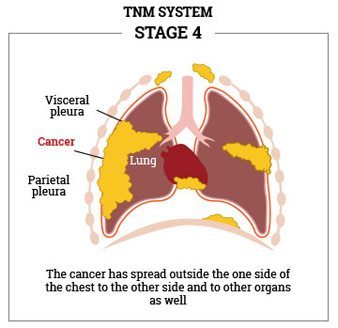
The cancer specialist to whom she was referred recommended an open lung biopsy. The surgeon who performed the procedure in November 2008 found 15 tumors in Moore’s right lung and diagnosed Moore with stage IV mesothelioma.

The doctor recommended that she seek treatment at M.D. Anderson Medical Center in Texas.

With patients with cancer limited to one lung, doctors may remove the cancerous lung and surrounding tissue and perform chemotherapy and radiation. But Moore had mesothelioma in both lungs so she had limited treatment options.

Moore underwent 28 chemotherapy treatments that lasted until December 2010. Before the treatments concluded, there was no active sign of mesothelioma. Moore’s physicican, Dr. Anne Tsao, director of the mesothelioma program at M.D. Anderson, informed Moore that she was the first of her patients to achieve full remission.

Approximately 3,000 people in the U.S. are diagnosed with mesothelioma each year. Many are older workers, veterans and retirees who were exposed to asbestos in the workplace decades ago. Typically, mesothelioma symptoms appear 30 years to 50 years after initial exposure to asbestos.

For more information about mesothelioma, click here.

Posted by wade rawlins at 4:41 PM

Ten Facts About Asbestos Exposure, Asbestosis and Mesothelioma

Friday, Dec 30, 2011

The end of the year and start of the new year are a time for list making. As we welcome  2012, here is a timeless list of important facts about asbestos and mesothelioma, a type of cancer caused by inhaling asbestos:

•  When a person inhales asbestos fibers, most of the fibers are expelled, but some can penetrate deep into the lung and remain lodged there for a lifetime. Asbestos fibers can cause inflammation and scarring, which can affect breathing and gradually lead to disease.

• People are more likely to experience asbestos-related disorders when they are exposed to high concentrations of asbestos, are exposed for longer periods of time or are exposed more often.

• There is no safe level of exposure to asbestos, according to the U.S. Environmental Protection Agency.

• Exposure to asbestos increases the risk of developing asbestosis, a scarring of the lungs due to retained asbestosis fibers, as well as malignant diseases such as lung cancer and mesothelioma.

• The health effects of asbestos exposure may continue to progress even after a person is no longer exposed to asbestos.

• Smoking together with exposure to asbestos greatly increases the likelihood of lung cancer.

• Fluid around the lungs (known as pleural effusion) and changes in the lining of the lung such as thickening, plaques and calcification may be early indicators of past asbestos exposure. Pleural effusions may be an early symptoms of mesothelioma.

• Most cases of asbestos are diagnosed 30 years or more after a worker was first exposed to asbestos. In some cases, asbestos disease appears after 40 or 50 years.

• Asbestos-related disease has been diagnosed in asbestos workers, family members, veterans and in particular Navy veterans, people who lived near a factory that used asbestos-containing materials and many trades workers who were exposed to asbestos dust. Many older buildings in New York City contain asbestos building materials and the asbestos may be released into the air if the asbestos is disturbed. 

• Approximately 3,000 people are diagnosed with mesothelioma each year in the U.S. The number of people diagnosed with meosthelioma has been increasing in recent decades.

If you would like additional information about mesothelioma, click here.


Source: Agency for Toxic Substances and Disease Registry

Posted by wade rawlins at 7:35 PM

Insights About Cell Proteins that Fuel Mesothelioma Tumors May Lead to Advances in Cancer Treatment

Wednesday, Dec 28, 2011

Medical researchers at the University of Maryland are gaining insights into the growth of mesothelioma tumors that may lead to improved diagnosis and treatment for individuals with peritoneal mesothelioma.

 Malignant peritoneal mesothelioma is an aggressive cancer of the lining of the abdomen caused by ingestion of asbestos. There is a great variability in how patients respond to peritoneal mesothelioma with some patients dying quickly and others living for lengthy periods of time. Patients usually don’t notice symptoms of  mesothelioma until decades after exposure to asbestos, a mineral fiber widely used in building materials.

Using samples of tumors obtained from cancer patients who underwent surgery for malignant peritoneal mesothelioma, Drs. H. Richard Alexander, a surgeon, and Sheelu Varghese, a research scientist, employ sophisticated assay techniques to analyze the cancer cells and understand what causes mesothelioma tumors to grow.

The researchers published findings in 2011 that there is a family of related proteins that are present in large numbers of peritoneal mesothelioma cells. Their research suggested that patients with higher quantities of certain proteins had faster growing cancerous tumors and shorter survival. Two proteins identified in abundance in peritoneal mesothelioma tumors were P13CA and RICTOR.

The researchers hypothesize that the mesothelioma tumors are addicted to these proteins for survival.  If true, blocking the proteins may starve the mesothelioma tumors and slow or stop their growth. The Maryland researchers current work is focused on determining whether their hypothesis is accurate.

Drs. Varghese and Alexander are testing a potent inhibitor of these proteins in the laboratory. They observed that the inhibitor prevents malignant peritoneal mesothelioma tumor growth in laboratory mice. Based on these promising findings, the inhibitor may be used in clinical trials soon.

Approximately 2,500 to 3,000 people a year are diagnosed with mesothelioma. Most are older workers, retired workers and veterans who were exposed to asbestos decades ago in a workplace or in the service.

For more information about mesothelioma, click here.

Posted by wade rawlins at 7:06 PM
image

Contributing Author

Wade Rawlins is a former environmental reporter with the Raleigh News & Observer.

Editorial Board

  • Mike Dayton, Editor
  • Nancy Meredith, Writer
  • Aaron Phelps, Writer
  • Lisa Vaughn, Contributor
Belluck & Fox

We Have Won Our Clients More Than $450 million.

Copyright About Mesothelioma.net
Website by Consultwebs.com